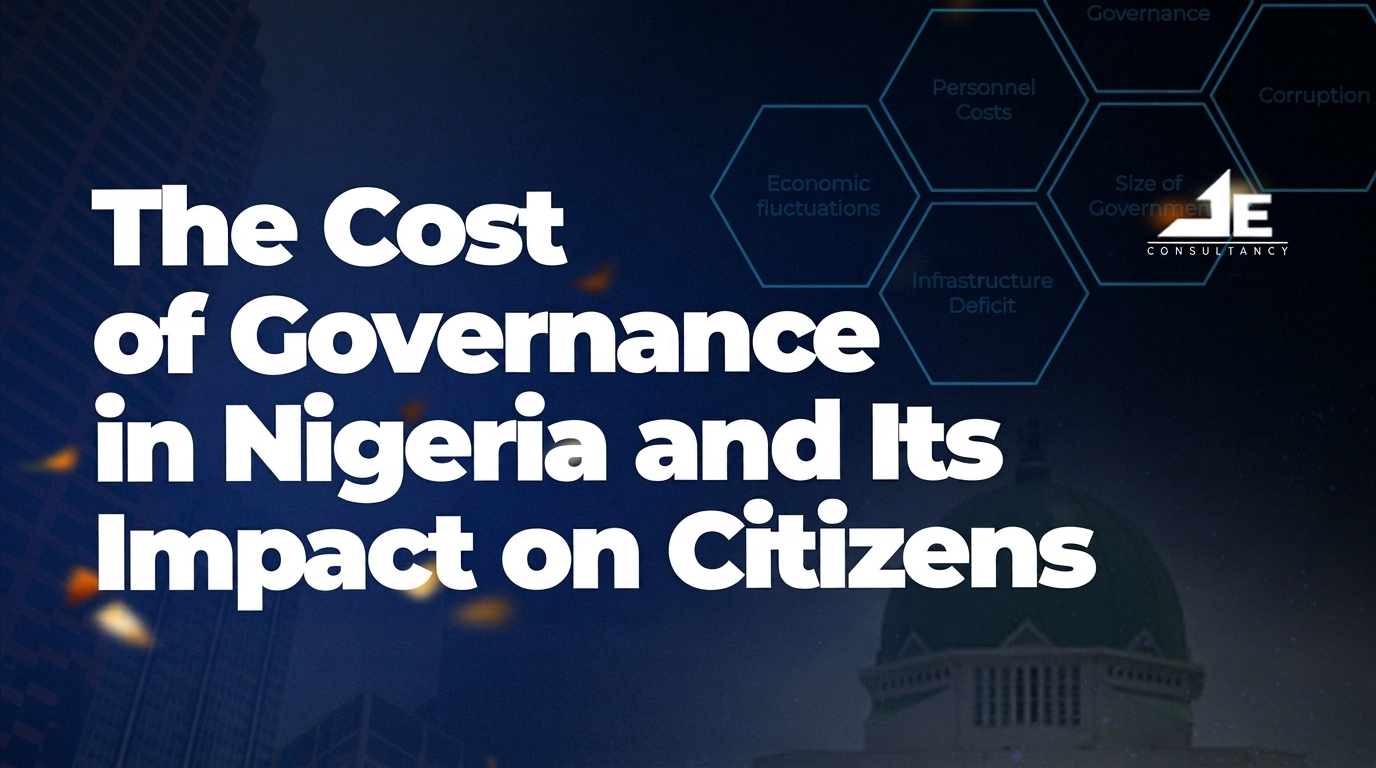
The Cost of Governance in Nigeria and its Impact on Citizens
June 26, 2026·4 min read·By je_consultancy
Listen to this article
Click play to start listening
Cost of governance refers to any expense, price, or cost associated with running a government. It is the cost incurred by the government in the course of providing goods and services to its citizens. It can also be said to be the money a government spends on administrative processes, referred to as administrative cost, usually categorized into: Recurrent Expenditure Capital Expenditure Recurrent Expenditure These are payments made to maintain the operations of a government or organisation. They are ongoing expenses, made on a regular basis such as weekly, monthly, etc., and are required for the day-to-day operation of the government. Examples include: Personnel Costs: Salaries, wages, allowances, pensions, and other benefits for government employees across various sectors. Overheads: Office rent, telephone, electricity, water, etc. Debt Servicing: Repayment of loans (principal and accrued interest) borrowed by the government. Subsidies and Transfers: Financial supports or assistance such as grants provided by the government to various sectors like agriculture, manufacturing, electricity, transportation, etc. Pensions and Gratuities Capital Expenditure These are expenses incurred on long-term assets such as infrastructure, buildings, equipment, etc. Factors Influencing the Cost of Governance in Nigeria Government Structure Nigeria has three tiers—federal, state, and local—each with its own administrative structure, increasing overhead costs. Size of Government Numerous MDAs and political appointees with overlapping functions drive up administrative costs. Salaries and Allowances High compensation for public officials, including pensions for ex-officeholders, significantly burdens public finances. Corruption Mismanagement, bribery, embezzlement, and diversion of funds increase administrative inefficiencies and public sector costs. Revenue Allocation Inequitable distribution of funds across tiers of government can lead to overspending, waste, and inefficiency. Infrastructure Deficit High costs due to poor regulation, repeated repairs, and substandard projects inflate governance costs. Debt Servicing Rising domestic and external debt requires significant allocations for repayment and interest. Economic Fluctuations Volatile oil prices, depreciating naira, and inflation increase the cost of goods, services, and borrowing, thereby increasing overall government expenditure. What Some Countries Did to Reduce Governance Cost India Digitalization of services Tax structure simplification Reduced bureaucracy and promoted e-governance Privatization of certain state-owned enterprises Rwanda Reduction in the number of political appointees Kenya Suspension of non-essential travel for officials 6-month suspension of vehicle purchases for government officials 50% reduction in government advisers Scrapping budget allocations for First Lady and Deputy President’s wife offices The Impact on Citizens Economic Burden / Budgetary Constraints Less funding for essential sectors like education, healthcare, and infrastructure due to overspending on governance. Increased Taxation and Public Debt Higher taxes and government borrowing reduce citizens’ disposable income and increase long-term financial pressure. Inequality and Poverty Misallocated resources exacerbate poverty, especially among vulnerable groups. Corruption and Mismanagement Public funds are wasted, services suffer, and trust in government diminishes. Political Instability and Social Unrest Citizens’ dissatisfaction can lead to protests, strikes, and violence, hampering national development. The Government Structure in Nigeria Three Arms of Government Executive: President, Vice President, Ministers, Permanent Secretaries, Aides, etc. Legislative: National Assembly (469 members) Senate: 109 members House of Reps: 360 members Judiciary: Headed by the Chief Justice of Nigeria Supreme Court Court of Appeal Federal and State High Courts Sharia/Customary Courts Magistrate Courts Election Tribunals Replicated at State and Local Levels States: Governors, Commissioners, State Assembly Members, State Judiciary Local Governments: Chairmen, Councillors, Local Government Officials Recommendations Reduce Recurrent Expenditure The current state of excessive spending is unsustainable. More resources must be redirected to capital projects that foster long-term growth. Invest in Infrastructure Good roads, electricity, and functional refineries lower production and transportation costs, facilitating economic activities. Cut Remuneration and Reduce Government Size Reduce salaries and allowances for political officeholders Merge MDAs with overlapping roles Eliminate wasteful spending and ghost workers Sanctions Against Corruption Enforce laws to punish: Embezzlement Diversion of funds Mismanagement of resources Adopt International Best Practices Learn from India, Kenya, Rwanda, and others that implemented bold reforms to cut costs and improve governance efficiency.
Cost of governance refers to any expense, price, or cost associated with running a government. It is the cost incurred by the government in the course of providing goods and services to its citizens. It can also be said to be the money a government spends on administrative processes, referred to as administrative cost, usually categorized into:
Recurrent Expenditure
Capital Expenditure
Recurrent Expenditure
These are payments made to maintain the operations of a government or organisation. They are ongoing expenses, made on a regular basis such as weekly, monthly, etc., and are required for the day-to-day operation of the government.
Examples include:
Personnel Costs: Salaries, wages, allowances, pensions, and other benefits for government employees across various sectors.
Overheads: Office rent, telephone, electricity, water, etc.
Debt Servicing: Repayment of loans (principal and accrued interest) borrowed by the government.
Subsidies and Transfers: Financial supports or assistance such as grants provided by the government to various sectors like agriculture, manufacturing, electricity, transportation, etc.
Pensions and Gratuities
Capital Expenditure
These are expenses incurred on long-term assets such as infrastructure, buildings, equipment, etc.
Factors Influencing the Cost of Governance in Nigeria
Government Structure Nigeria has three tiers—federal, state, and local—each with its own administrative structure, increasing overhead costs.
Size of Government Numerous MDAs and political appointees with overlapping functions drive up administrative costs.
Salaries and Allowances High compensation for public officials, including pensions for ex-officeholders, significantly burdens public finances.
Corruption Mismanagement, bribery, embezzlement, and diversion of funds increase administrative inefficiencies and public sector costs.
Revenue Allocation Inequitable distribution of funds across tiers of government can lead to overspending, waste, and inefficiency.
Infrastructure Deficit High costs due to poor regulation, repeated repairs, and substandard projects inflate governance costs.
Debt Servicing Rising domestic and external debt requires significant allocations for repayment and interest.
Economic Fluctuations Volatile oil prices, depreciating naira, and inflation increase the cost of goods, services, and borrowing, thereby increasing overall government expenditure.
What Some Countries Did to Reduce Governance Cost
India
Digitalization of services
Tax structure simplification
Reduced bureaucracy and promoted e-governance
Privatization of certain state-owned enterprises
Rwanda
Reduction in the number of political appointees
Kenya
Suspension of non-essential travel for officials
6-month suspension of vehicle purchases for government officials
50% reduction in government advisers
Scrapping budget allocations for First Lady and Deputy President’s wife offices
The Impact on Citizens
Economic Burden / Budgetary Constraints Less funding for essential sectors like education, healthcare, and infrastructure due to overspending on governance.
Increased Taxation and Public Debt Higher taxes and government borrowing reduce citizens’ disposable income and increase long-term financial pressure.
Inequality and Poverty Misallocated resources exacerbate poverty, especially among vulnerable groups.
Corruption and Mismanagement Public funds are wasted, services suffer, and trust in government diminishes.
Political Instability and Social Unrest Citizens’ dissatisfaction can lead to protests, strikes, and violence, hampering national development.
The Government Structure in Nigeria
Three Arms of Government
Executive: President, Vice President, Ministers, Permanent Secretaries, Aides, etc.
Legislative: National Assembly (469 members)
Senate: 109 members
House of Reps: 360 members
Judiciary: Headed by the Chief Justice of Nigeria
Supreme Court
Court of Appeal
Federal and State High Courts
Sharia/Customary Courts
Magistrate Courts
Election Tribunals
Replicated at State and Local Levels
States: Governors, Commissioners, State Assembly Members, State Judiciary
Local Governments: Chairmen, Councillors, Local Government Officials
Recommendations
Reduce Recurrent Expenditure The current state of excessive spending is unsustainable. More resources must be redirected to capital projects that foster long-term growth.
Invest in Infrastructure Good roads, electricity, and functional refineries lower production and transportation costs, facilitating economic activities.
Cut Remuneration and Reduce Government Size
Reduce salaries and allowances for political officeholders
Merge MDAs with overlapping roles
Eliminate wasteful spending and ghost workers
Sanctions Against Corruption Enforce laws to punish:
Embezzlement
Diversion of funds
Mismanagement of resources
Adopt International Best Practices Learn from India, Kenya, Rwanda, and others that implemented bold reforms to cut costs and improve governance efficiency.
Tags
#cost of governance#nigeria governance#recurrent expenditure#capital expenditure#government spending#public administration#corruption in nigeria#fiscal responsibility#government reform#debt servicing#political appointees#governance cost reduction#nigerian economy#public finance#mdas#government efficiency
Share This Article
Comments (0)
Leave a Reply
No approved comments yet. Be the first to comment!