Listen to this article
Click play to start listening
Wealth tax is a fiscal policy tool designed to levy a tax on individuals or entities based on their net wealth. Unlike income tax, which is based on income per time, wealth tax is based on the total value of assets owned, such as real estate, investments, cash, and luxury goods, after deducting liabilities. It is often implemented to promote economic equity, reduce wealth concentration, and generate government revenue.
Wealth tax is a direct tax imposed on the market value of an individual’s or entity’s total assets, minus any liabilities. It is typically levied on high net worth individuals (HNWIs) and is structured to target wealth accumulation rather than income generation.
Wealth tax can be categorised based on its implementation and the types of assets it includes. The main types of wealth taxes that have been enacted worldwide are:
- Inheritance Tax: Inheritances are taxed on the transfer of wealth after death, with the tax paid by the estate before assets are distributed. The rate varies based on the inheritance size and the heir's relationship with the deceased.
- Net Wealth Tax: A tax is charged each year based on a person's or business's total net worth, which is calculated by subtracting liabilities from total assets. This tax mainly impacts high net worth individuals (HNWIs).
- Capital Gains Tax: Capital Gains Tax (CGT) is applied to profits from selling assets like real estate, stocks, and businesses. Both individual and corporate entities pay CGT.
- Property Tax: These are taxes imposed on land and buildings based on their market value and are usually paid annually to local or state governments. They serve as a crucial revenue source for funding public services such as schools, roads, and law enforcement.
- Luxury Tax: Imposed on high-value nonessential goods such as yachts, private jets, expensive cars, and jewellery. Targets discretionary spending by the wealthy. Helps generate government revenue while discouraging excessive luxury consumption.
- Solidarity Wealth Tax: A solidarity wealth tax is a government imposed tax designed to fund socially unifying projects or initiatives. It is an additional tax applied alongside regular income taxes and is often intended as a short-term solution to address specific societal needs.
Wealth Tax in Nigeria: Nigeria does not currently have a formal wealth tax. However, there have been discussions about introducing one to help generate more money for the government. Supporters believe that an inheritance tax could help reduce wealth inequality and limit large accumulations of wealth. Given below are some existing tax types in Nigeria that indirectly affect wealth accumulation and transfer
- Capital Gains Tax (CGT): This tax applies to profits from the disposal of chargeable assets, including real estate, stocks, and bonds. The standard CGT rate in Nigeria is 10%.
- Stamp Duties Act: This legislation imposes taxes on specific transactions, such as the transfer of property and shares. The duty rates vary depending on the transaction type and asset value.
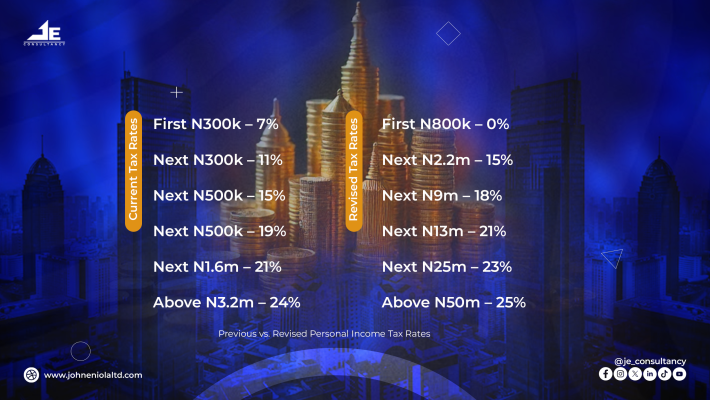
- Personal Income Tax: The Nigeria Tax Bill 2024 introduced significant reforms to the Personal Income Tax (PIT) structure to enhance equity and revenue. A key change is the increased tax rate for high-income earners, with individuals earning over ?50 million per year now facing a 25% rate-up from previous levels. This aims to ensure that wealthier citizens contribute more to national revenue
International Experiences with Wealth Taxation
Wealth taxes have been implemented in several countries with varying degrees of success. While some nations continue to utilize them as instruments for revenue generation and wealth redistribution, others have discontinued them due to administrative complexities and adverse economic consequences.
Spain
Tax Structure
Spain operates a progressive wealth tax system with rates ranging from 0.2% to 3.5% on net wealth above specified thresholds.
Exemptions
The following assets are generally exempt:
-
Family businesses
-
Primary residences (up to a specified value)
-
Certain qualifying investments
Outcome
The tax generates substantial revenue for the government and contributes to wealth redistribution. However, critics argue that it encourages capital flight and tax planning strategies among high-net-worth individuals.
Norway
Wealth Tax Rate
Norway imposes a wealth tax of approximately 0.95% on net assets exceeding NOK 1.7 million (approximately US$160,000).
Revenue Contribution
The wealth tax contributes approximately 1% of Norway's Gross Domestic Product (GDP) annually.
Outcome
The tax remains politically popular and widely supported. Nevertheless, debates continue regarding its potential impact on entrepreneurship, business expansion, and private investment.
Argentina
Solidarity Wealth Tax (2020)
Argentina introduced a one-time solidarity wealth tax on ultra-high-net-worth individuals in 2020 to finance government expenditures associated with the COVID-19 pandemic.
Outcome
The measure provided emergency fiscal support during a national crisis and demonstrated how wealth taxation can be utilized as a temporary revenue-generating mechanism during exceptional circumstances.
Successes of Wealth Tax Systems
Several countries have experienced notable benefits from wealth taxation, including:
1. Revenue Generation
Countries such as Spain and Norway have successfully generated additional government revenue through wealth taxation, helping to finance public services and development projects.
2. Wealth Redistribution
Wealth taxes can contribute to reducing economic inequality by ensuring that individuals with substantial wealth contribute proportionately to national development.
3. Progressive Taxation
A wealth tax aligns with the principles of progressive taxation, placing a greater tax burden on individuals with higher levels of wealth and financial capacity.
4. Encouragement of Asset Productivity
Wealth taxation may encourage individuals to invest in productive ventures and income-generating assets rather than maintaining idle wealth holdings.
Challenges of Wealth Tax Systems
Despite their advantages, wealth taxes present several challenges.
1. Capital Flight and Tax Avoidance
High-net-worth individuals may relocate assets or establish offshore structures to reduce their tax liabilities.
2. Administrative Complexity
Accurately assessing the value of assets such as real estate, privately owned businesses, artwork, and luxury items can be difficult and costly.
3. Impact on Investment
Excessive wealth taxation may discourage entrepreneurship, business expansion, and investment in domestic economies.
4. Political Resistance
Wealth taxes frequently encounter opposition from influential business groups and wealthy individuals, sometimes resulting in policy reversals or reforms.
Economic and Fiscal Implications of Implementing a Wealth Tax Policy in Nigeria
The introduction of a wealth tax in Nigeria could have significant fiscal, economic, social, and political consequences. These implications are examined below.
1. Potential Revenue Generation from Wealth Taxation
A properly designed wealth tax could provide the Nigerian Government with an additional source of revenue to support critical sectors such as infrastructure, healthcare, education, and social welfare.
Revenue Potential
i. According to wealth reports, Nigeria has over 8,200 millionaires, 23 centimillionaires, and 3 billionaires, with total private wealth estimated at more than US$228 billion.
ii. A modest wealth tax of 1% on individuals with net assets exceeding ?1 billion could generate billions of naira annually.
iii. Wealth taxation could help reduce Nigeria's dependence on oil revenues by diversifying the national tax base.
Possible Challenges to Revenue Collection
i. Tax Avoidance and Evasion: High-net-worth individuals may move assets offshore or adopt sophisticated tax planning strategies to minimize tax obligations.
ii. Enforcement Challenges: Nigeria's tax administration system currently lacks comprehensive databases and valuation mechanisms for tracking private wealth.
iii. Corruption and Revenue Leakages: Without strong accountability measures, revenues generated from wealth taxation may be vulnerable to mismanagement.
2. Impact on Economic Growth and Investment Climate
The introduction of a wealth tax could produce both positive and negative outcomes for economic growth and investment.
Positive Effects
i. Encourages Economic Redistribution
Revenue generated from wealth taxation can be invested in social programmes that promote economic inclusion, poverty reduction, and improved living standards.
ii. Diversifies Government Revenue Sources
A broader tax base would reduce the country's dependence on oil revenues and strengthen fiscal sustainability.
iii. Encourages Productive Investments
A well-designed wealth tax may discourage the accumulation of idle assets and encourage investments in businesses, industrial development, and job creation.
Negative Effects
i. Risk of Capital Flight
Wealthy individuals may transfer assets to lower-tax jurisdictions such as Dubai or Mauritius to reduce tax liabilities.
ii. Potential Reduction in Foreign Direct Investment (FDI)
Some investors may perceive wealth taxation as unfavourable to business, potentially reducing Nigeria's attractiveness as an investment destination.
3. Social and Political Considerations
Social Considerations
i. Reduction of Income Inequality
Nigeria experiences significant wealth disparities. A wealth tax could contribute to narrowing the gap between the wealthy and the poor.
ii. Funding for Social Programmes
Additional government revenue could be directed toward education, healthcare, social protection, and poverty alleviation initiatives, thereby improving overall societal welfare.
Political Considerations
i. Improved Government Accountability
If effectively implemented and transparently managed, wealth taxation could strengthen demands for improved governance and fiscal responsibility.
Potential Challenges
i. Resistance from the Wealthy Elite
Individuals and groups with substantial economic influence may oppose the policy through lobbying efforts, legal challenges, and political pressure.
ii. Policy Uncertainty and Reversals
Changes in political leadership may result in inconsistent implementation or reversal of wealth tax policies, creating uncertainty for investors and taxpayers.
iii. Corruption Risks
Weak transparency and accountability mechanisms may undermine public confidence if revenues generated are not properly managed or utilized.
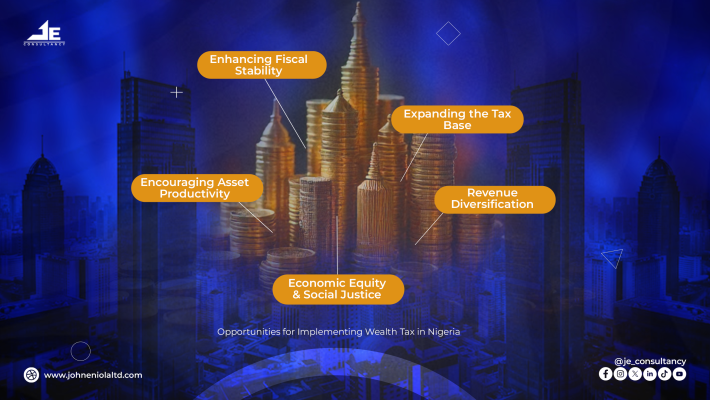
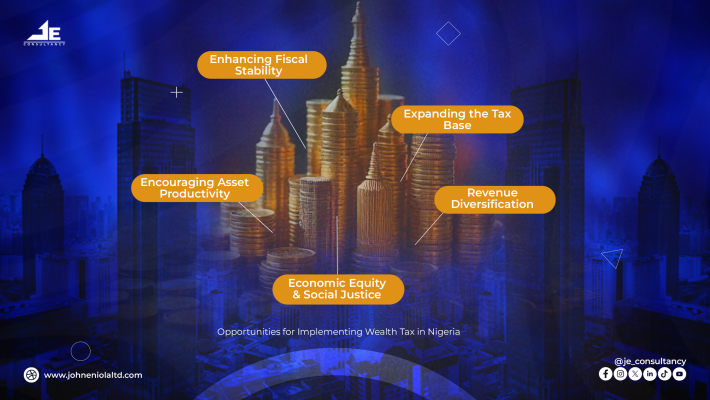
Opportunities for Implementing Wealth Tax in Nigeria
Policy Recommendations for Wealth Tax Implementation in Nigeria
The following recommendations are proposed for the Nigerian Government regarding the implementation of a wealth tax policy. To ensure public acceptance and minimize policy resistance, these measures should be introduced gradually and in phases.
Taxable Wealth Categories
The wealth tax should focus on the following categories of assets:
i. Real Estate
Taxable real estate assets should exclude primary residences up to a specified value threshold to protect middle-income homeowners and prevent undue hardship.
ii. Financial Assets
This category should include investments such as:
-
Stocks
-
Bonds
-
Mutual Funds
-
Other marketable securities
iii. Luxury Assets
Luxury assets that demonstrate significant wealth accumulation should be subject to taxation. These include:
-
Yachts
-
Private jets
-
High-value jewellery
-
Other luxury collectibles
iv. High-Grossing Businesses
Business ownership interests and holdings exceeding a predetermined valuation threshold should be included within the wealth tax framework.
Progressive Wealth Tax Structure for High-Net-Worth Individuals (HNWIs)
To promote equity and ensure that wealthier individuals contribute proportionately, a progressive tax system is recommended as follows:
| Net Worth Range | Proposed Wealth Tax Rate |
|---|---|
| ?1 billion – ?5 billion | 0.5% |
| Above ?5 billion – ?10 billion | 1.0% |
| Above ?10 billion | 2.0% |
This graduated structure ensures that individuals with greater wealth contribute more while limiting the burden on emerging entrepreneurs and investors.
Conclusion
The implementation of a well-designed wealth tax policy in Nigeria has the potential to generate additional government revenue, reduce wealth inequality, and promote long-term economic stability. However, achieving these objectives will require careful planning, strong institutional capacity, and transparent administration.
By adopting progressive tax rates, strengthening enforcement mechanisms, improving asset valuation systems, and ensuring transparent allocation of tax revenues, the Nigerian Government can maximize the benefits of a wealth tax while minimizing potential economic and administrative challenges.
References
-
African Wealth Report, Henley & Partners.
-
New World Wealth Report, Henley & Partners.
Tags
Comments (0)
Leave a Reply
No approved comments yet. Be the first to comment!